
Have you ever wondered how long it takes to receive compensation after a personal injury accident?
The process can be complex and varies significantly from case to case. Understanding the steps involved in a personal injury claim can help you navigate this challenging time.
Knowing what to expect can make a significant difference. This article will guide you through the personal injury settlement timeline, providing insights into the various stages and factors that influence the duration of your claim.
Key Takeaways
- Understanding the steps involved in a personal injury claim
- Factors that influence the duration of a personal injury settlement
- How to navigate the personal injury claim process effectively
- Tips for managing expectations during the settlement timeline
- Importance of legal representation in personal injury cases
Understanding Personal Injury Claims
When an individual is injured due to someone else’s negligence, they may be entitled to compensation through a personal injury claim. This process involves seeking financial reparation for damages incurred, such as medical expenses, lost wages, and pain and suffering.
Types of Personal Injury Cases
Personal injury cases encompass a wide range of incidents, including car accidents, slip and fall accidents, medical malpractice, and workplace injuries. Each type of case has its unique circumstances and legal considerations.
Key Factors That Affect Settlement Timelines
Several factors influence the timeline of a personal injury settlement, including the severity of the injury, the clarity of liability, and the insurance company’s responsiveness. Understanding these factors can help manage expectations.
Average Timeline Expectations
While it’s challenging to provide an exact timeline for a personal injury settlement, most cases are resolved within a few months to a few years. The average timeline can vary significantly based on the complexity of the case and the negotiation process.
Initial Steps After an Injury: First 30 Days
Navigating the aftermath of an injury requires immediate action to ensure a strong foundation for your personal injury case. The steps you take in the first 30 days can significantly influence the timeline for personal injury settlement.
Seeking Immediate Medical Treatment
Seeking medical attention immediately after an injury is crucial. Not only does it ensure your health and well-being, but it also creates a medical record that can be vital for your claim. Delaying medical treatment can give the insurance company grounds to dispute your injury’s severity or its relation to the incident.
Documenting Your Injuries and Damages
Documenting every aspect of your injuries and related damages is essential. This includes taking photographs of your injuries, keeping a detailed journal of your pain and suffering, and collecting receipts for any expenses related to your injury. Proper documentation supports your claim and can expedite the understanding personal injury settlement timeline.
Finding and Hiring a Personal Injury Attorney
Finding the right personal injury attorney can make a significant difference in your case. Look for an attorney with experience in handling cases similar to yours. They can guide you through the process, help gather evidence, and negotiate with insurance companies to achieve a fair settlement.
| Initial Steps | Importance | Actions |
|---|---|---|
| Seeking Medical Treatment | Creates a medical record, supports claim | Visit a doctor, follow treatment plans |
| Documenting Injuries and Damages | Provides evidence, supports claim | Take photos, keep a journal, collect receipts |
| Hiring a Personal Injury Attorney | Expert guidance, negotiation with insurance companies | Research, interview attorneys, hire based on experience |
By taking these initial steps seriously and acting promptly, you can lay a solid foundation for your personal injury claim, potentially improving the timeline for personal injury settlement.
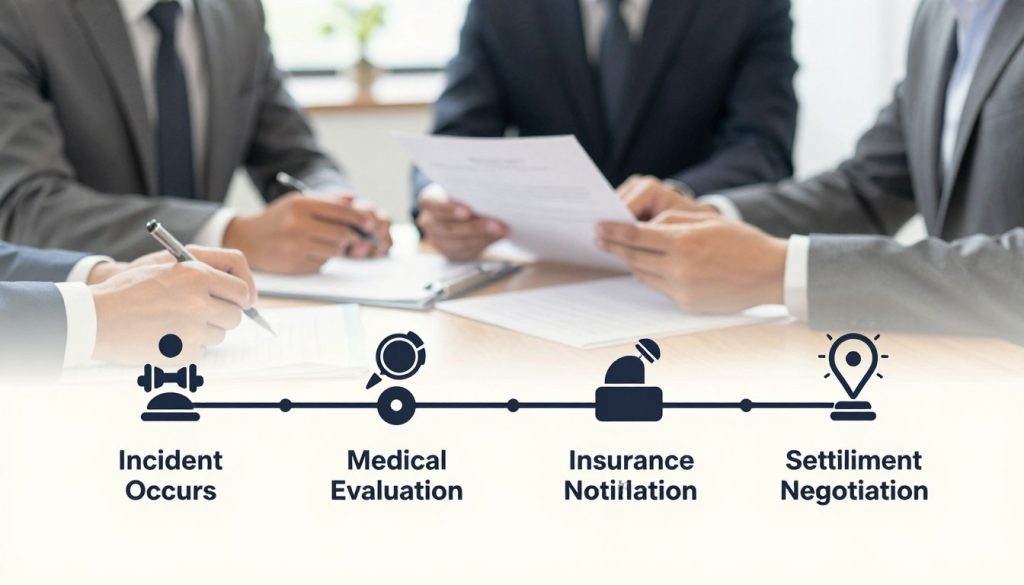
The Personal Injury Settlement Timeline Explained
Understanding the timeline of a personal injury settlement is crucial for managing expectations throughout the claims process. A personal injury claim’s duration can vary significantly based on several factors, including the complexity of the case, the severity of the injuries, and the insurance company’s response.
Pre-Litigation Phase: 1-3 Months
The pre-litigation phase is the initial stage of the personal injury settlement process. During this period, your attorney will typically send a demand letter to the insurance company, outlining your injuries, damages, and the compensation you are seeking. This phase usually lasts between one to three months and involves negotiations with the insurance adjuster.
Key activities during this phase include:
- Preparing and submitting the demand letter
- Negotiating with the insurance adjuster
- Gathering additional evidence as needed
Investigation and Evidence Gathering: 2-4 Months
Investigation and evidence gathering are critical components of building a strong personal injury case. This phase can last from two to four months and involves collecting medical records, witness statements, and other relevant documentation. Your attorney will work to establish liability and quantify your damages.
During this stage, it’s essential to maintain open communication with your attorney and provide any requested information promptly to avoid delays.
Maximum Medical Improvement Considerations
Reaching Maximum Medical Improvement (MMI) is a significant milestone in the personal injury settlement process. MMI occurs when your condition has stabilized, and further medical treatment is unlikely to result in substantial improvement. It’s crucial to wait until you’ve reached MMI before settling your claim to ensure that all your medical expenses are accounted for.
The importance of MMI cannot be overstated:
- Ensures that all medical expenses are considered
- Provides a clearer picture of the long-term impact of your injuries
- Helps in negotiating a fair settlement
By understanding these stages, you can better navigate the personal injury settlement process and manage your expectations regarding the average time for personal injury settlement.
Negotiation and Settlement Process: 3-9 Months
After the initial steps are taken, the negotiation and settlement process begins, playing a pivotal role in personal injury cases. This phase is crucial as it involves communicating with the insurance company to reach a fair settlement.
Preparing and Sending the Demand Letter
The negotiation process starts with preparing and sending a demand letter to the insurance company. This letter outlines the details of the claim, including the extent of the injuries, medical expenses, lost wages, and other damages. It’s essential to include all relevant documentation to support the claim.
- Medical records and bills
- Proof of lost wages
- Documentation of other related expenses
Insurance Company Response Timeline
After sending the demand letter, the insurance company will review the claim and respond within a few weeks to a few months. Their response may include a settlement offer, a denial of the claim, or a request for additional information. It’s crucial to be prepared to negotiate the terms of the settlement.
Settlement Negotiation Strategies and Timeframes
Effective negotiation requires a strategic approach. Key strategies include:
- Being patient and not rushing into a settlement
- Having a clear understanding of the claim’s value
- Being prepared to counteroffer
The timeframe for settlement negotiations can vary significantly, typically ranging from 3 to 9 months, depending on the complexity of the case and the insurance company’s responsiveness.

Understanding the negotiation and settlement process is vital for navigating personal injury claims successfully. By being informed and prepared, claimants can improve their chances of securing a fair settlement.
When Settlement Negotiations Fail: Litigation Timeline
When settlement negotiations fail to produce a fair agreement, the next step in the personal injury claim process is litigation. This phase can be complex and involves several legal procedures. Understanding the litigation timeline can help manage expectations and prepare for the process ahead.
Filing a Lawsuit: The Process and Timeframe
Filing a lawsuit marks the beginning of the litigation process. This involves preparing and submitting a complaint to the court, which outlines the plaintiff’s claims against the defendant. The timeframe for filing a lawsuit can vary, typically taking a few weeks to a few months, depending on the complexity of the case and the court’s schedule.
Key steps in filing a lawsuit include:
- Drafting the complaint
- Filing the complaint with the court
- Serving the defendant with the lawsuit
Discovery Phase: 6-12 Months
The discovery phase is a critical part of the litigation process where both parties exchange information and evidence. This phase can last anywhere from 6 to 12 months, depending on the case’s complexity and the court’s rules.
During discovery, parties may:
- Exchange documents and evidence
- Conduct depositions
- Answer interrogatories
| Discovery Activities | Typical Duration |
|---|---|
| Document Exchange | 2-4 months |
| Depositions | 3-6 months |
| Interrogatories | 2-3 months |
Mediation, Trial Preparation, and Court Proceedings
Before going to trial, parties may engage in mediation to attempt to settle the case. If mediation fails, the case proceeds to trial. Trial preparation involves finalizing evidence, preparing witnesses, and developing trial strategies.
“Mediation can be an effective way to resolve disputes without the need for a trial, saving time and reducing legal costs.”
The trial process involves presenting the case to a judge or jury, who then render a verdict. The duration of the trial can vary significantly based on the case’s complexity and the court’s schedule.
Conclusion
Navigating a personal injury claim can be complex, but being informed about the timeline for personal injury settlement can make a significant difference. As discussed, the process involves several stages, from seeking medical treatment to negotiating with insurance companies.
The average time for personal injury settlement varies, typically ranging from a few months to a few years, depending on the complexity of the case and the parties involved. Having a clear understanding of personal injury settlement timeline helps manage expectations and reduces stress.
Effective personal injury settlement negotiations are crucial to achieving a fair outcome. Working with an experienced personal injury attorney can significantly impact the success of your claim. They can guide you through the process, ensuring that you receive the compensation you deserve.
By staying informed and patient, you can confidently navigate your personal injury claim. The key is to understand that the process takes time and to be prepared for the various stages involved.